
In a significant development for international trade in the Gulf region, the historic India Oman FTA is poised to be signed as a Comprehensive Economic Partnership Agreement (CEPA) this week. The deal, coinciding with Prime Minister Narendra Modi’s state visit to Muscat, marks a pivotal shift in bilateral economic relations. According to a report by the Global Trade Research Initiative (GTRI), this agreement could render over $3 billion worth of Indian exports to Oman tariff-free, effectively eliminating customs duties that currently range from 5% to as high as 100% on select goods.
For observers of global trade, this is more than just a tariff reduction exercise; it represents a strategic realignment in the Indian Ocean rim. This blog explores the details of the pact, the deep historical roots of this partnership, and the future economic implications for both nations.
The Deal by the Numbers
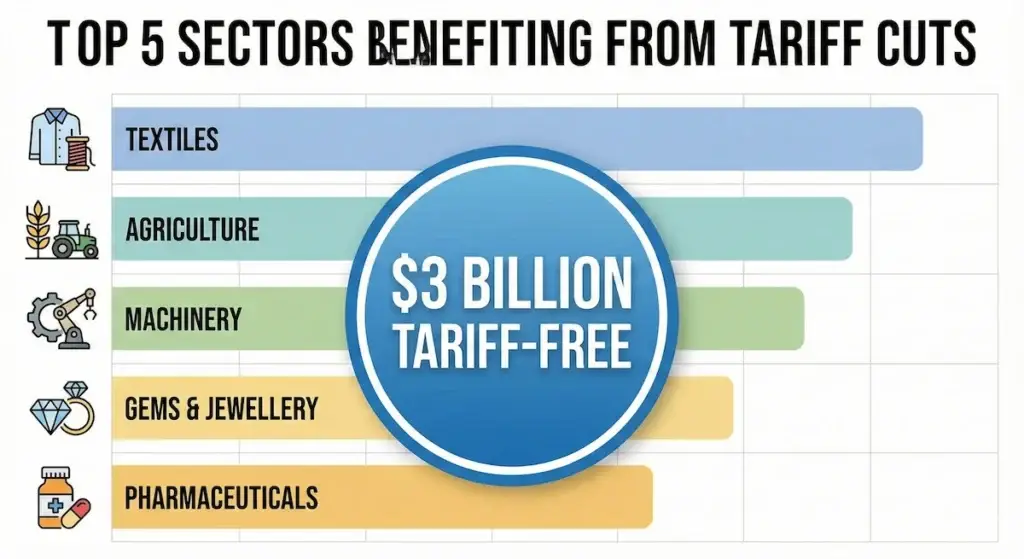
The core of the news—as reported by Moneycontrol and verified by recent trade data—is the liberalization of the tariff regime. Currently, roughly 80% of Indian goods entering Oman face an average import duty of 5%. However, specific sectors face much steeper barriers. The new India Oman FTA is set to dismantle these walls, offering immediate benefits to Indian exporters.
Key Sectors Set to Gain:
- Textiles & Footwear: Traditionally high-tariff categories that will see immediate relief, making Indian goods more competitive against Southeast Asian rivals.
- Agriculture & Food Security: Indian rice, fruits, and spices are staples in Oman. Removing duties strengthens Oman’s food security while boosting Indian agri-exports.
- Pharmaceuticals: The deal reportedly includes provisions for fast-tracking regulatory approvals, a template successfully tested in the India-UAE CEPA.
- Engineering & Machinery: Industrial exports, including boilers and mechanical appliances, will benefit significantly as Oman diversifies its industrial base.
According to the GTRI report, this agreement mirrors the successful framework of the India-UAE trade pact signed in 2022, suggesting a standardized Indian approach to trade diplomacy in the Gulf Cooperation Council (GCC) region.
From Magan to Modernity: A Historical Perspective
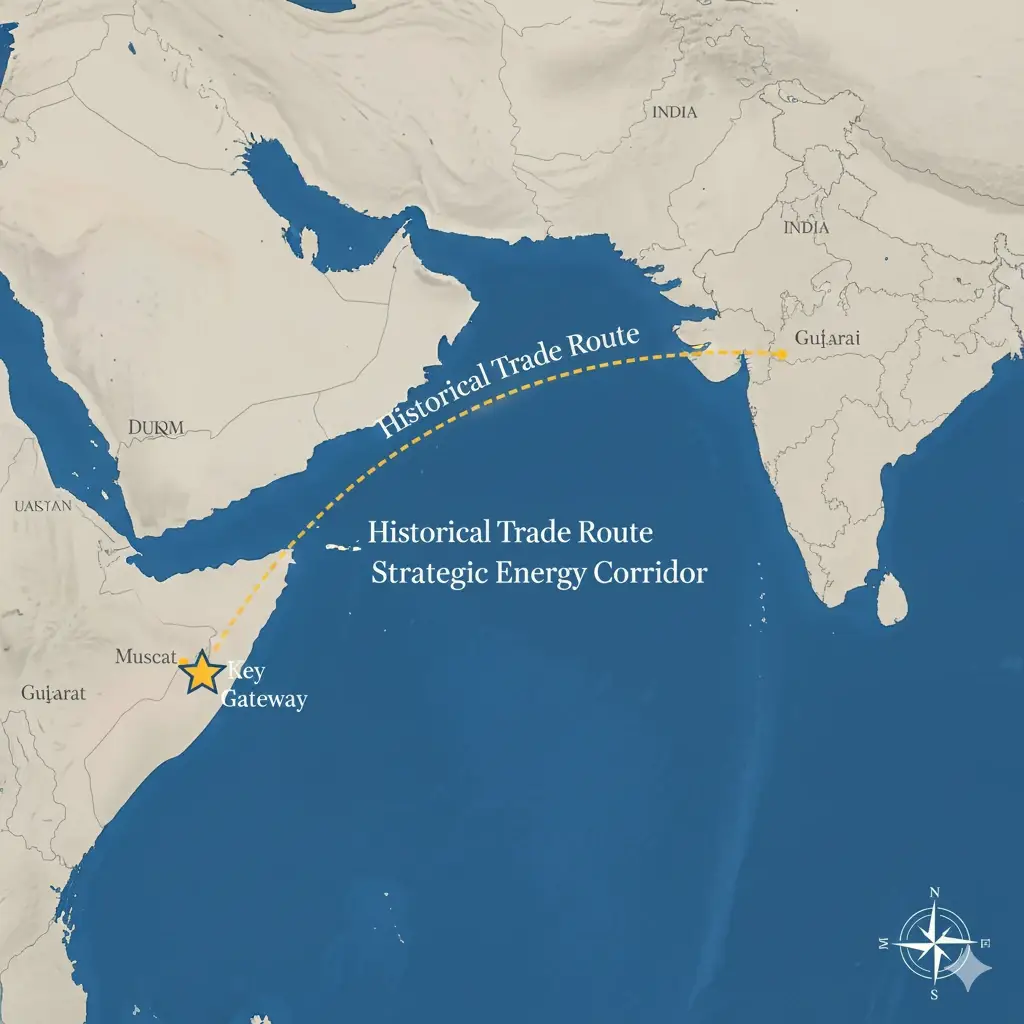
To understand the future of India-Oman trade, one must look at the past. The economic corridor between the Gujarat coast and the Arabian Peninsula is one of the oldest in human history.
Ancient Anchors: Archaeological evidence links the Indus Valley Civilization with “Magan”—the ancient Mesopotamian name for the region comprising modern-day Oman. For over 5,000 years, maritime trade has thrived here, powered by the predictable monsoon winds that allowed dhows to ferry copper, frankincense, and dates from the Peninsula in exchange for Indian spices, textiles, and ivory.
The Strategic Evolution: While the 20th century saw trade dominated by hydrocarbons, the 21st century has brought a strategic convergence. Diplomatic relations were formally established in 1955, but the relationship was upgraded to a “Strategic Partnership” in 2008.
Today, the numbers reflect this deep integration. In FY 2024-25, bilateral trade stood at approximately $10.6 billion. Oman hosts over 6,000 India-Oman joint ventures, and the Indian diaspora in Oman remains a vital economic bridge. This FTA is not a new start but a formalization of a commercial rhythm that has existed for millennia.
Future Outlook: A Mutual Win
The CEPA is designed to be mutually beneficial, addressing the specific economic anxieties and aspirations of both nations.
For India: The Gateway to the Gulf
For New Delhi, the primary win is market access. By eliminating duties on $3 billion of exports, Indian goods become instantly more competitive. Furthermore, Oman’s strategic location—particularly the port of Duqm, where India has secured access—serves as a logistical gateway to the broader GCC markets and East Africa. This reduces dependency on volatile routes and diversifies India’s energy security architecture.
For Oman: Vision 2040 and Diversification
For Muscat, the India Oman FTA is a critical tool for Oman Vision 2040, the Sultanate’s roadmap to move its economy beyond oil dependency.
- Lower Import Costs: Removing tariffs on Indian machinery and raw materials lowers the cost of industrialization for Omani businesses.
- Investment Inflow: The pact is expected to catalyze investment in green energy. Oman is positioning itself as a global hub for Green Hydrogen, and Indian conglomerates are already showing keen interest in setting up manufacturing bases in Special Economic Zones like Sohar and Salalah.
- Service Sector Growth: Beyond goods, the pact is likely to open avenues for cooperation in services, allowing Oman to leverage Indian expertise in IT, healthcare, and education.
Conclusion
The India-Oman FTA is a pragmatic step in a volatile global trade environment. By locking in low tariffs and harmonizing regulations, both nations are insulating their supply chains against future shocks. For India, it is another brick in the wall of its “West Asia” policy; for Oman, it is a leap toward a diversified, modern economy. As the dhows of the past give way to container ships and digital data flows, the ancient trade route between the subcontinent and the peninsula is proving to be as vital as ever.
References & Further Reading
- Moneycontrol: “Over $3 billion of Indian exports could become tariff-free under FTA with Oman” (Dec 2025).
- Global Trade Research Initiative (GTRI): Report on India-Oman CEPA benefits.
- Embassy of India, Muscat: Bilateral Trade Statistics (2024-2025).
- Oman News Agency: Updates on Sultan Haitham bin Tarik and PM Modi’s meeting.
Pingback: UAE Non-Oil Foreign Trade Hits $1 Trillion: A Historic First