
If international trade had a DNA sequence, it would be the HS Code.
Whether you are sourcing furniture from Foshan, electronics from Shenzhen, or exporting customized goods to the US or Europe, one number defines your destiny at the border. In India, you know it as the HSN Code (Harmonized System of Nomenclature). In the rest of the world, it is simply the HS Code (Harmonized System).
Regardless of the acronym, getting this number wrong is the fastest way to lose your profit margin to unexpected tariffs—or worse, have your cargo seized by customs.
In this edition of the Trade Guide, we are decoding the numbers to help you classify your goods with confidence.
What is the Difference? (HS vs. HSN)
Before we dive into the checklist, let’s clear up a common confusion.
- HS Code (Harmonized System): A 6-digit standard maintained by the World Customs Organization (WCO). It is used by over 200 countries to classify 98% of global trade.
- HSN Code: This is simply India’s adoption of the HS system.
- HTS Code: This is the US version (Harmonized Tariff Schedule).
The Golden Rule: The first 6 digits are universal worldwide. If you are exporting a ceramic vase from China to India, the first 6 digits (6911.10) are identical in both countries. However, countries add extra digits (7th, 8th, or 10th) to track local statistics and apply specific duties.
The Anatomy of the Code
An HS code isn’t just a random string of numbers; it is a logical hierarchy. It moves from broad categories to specific product descriptions.
- Chapter (First 2 digits): The broad category (e.g., Chapter 09: Coffee, Tea, Maté and Spices).
- Heading (Next 2 digits): The specific group within that chapter (e.g., 0901: Coffee).
- Subheading (Last 2 digits): The specific product type (e.g., 0901.11: Coffee, not roasted, not decaffeinated).
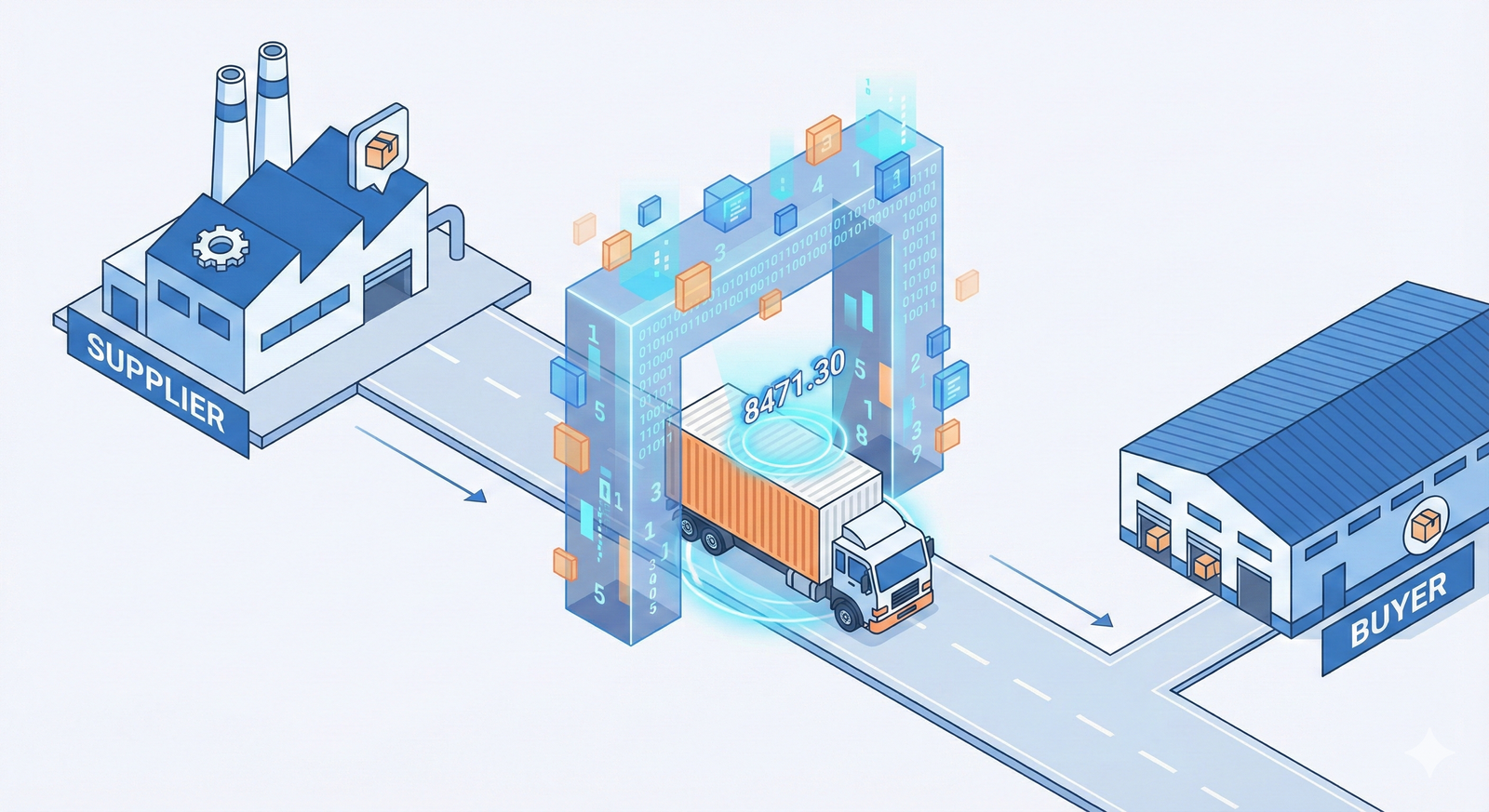
Why “Close Enough” Isn’t Good Enough
New importers often ask, “Can’t I just use the code my supplier gave me?”
My advice after 30 years in sourcing: Never blindly trust your supplier’s code.
Your supplier is an expert in manufacturing, not import compliance in your destination country. A Chinese factory might use a generic code that works for export from China, but that same code could trigger a higher duty rate or require special permits when entering your country.
The Risks of Misclassification:
- Overpayment: You might pay 15% duty on a code when the correct code attracts only 5%.
- Fines & Delays: Customs can flag your shipment for “misdeclaration,” leading to storage fees and penalties.
- Lost FTA Benefits: If you want to claim 0% duty under a Free Trade Agreement (like ASEAN-India or others), your HS code must strictly match the agreement’s requirements.
The “Trade Guide” Checklist: How to Find the Right Code
Use this checklist every time you source a new product. Do not guess—verify.
☐ Step 1: Define Your Product Physically
Customs doesn’t care about your marketing terms; they care about material and function. Ask:
- What is it made of? (e.g., 100% Cotton? 50% Plastic/50% Steel?)
- What is its function? (e.g., Is it a general screw, or a screw specifically for an aircraft?)
- Is it a finished product or a part?
☐ Step 2: Start with the “GRI” (General Rules of Interpretation)
You don’t need to be a lawyer, but you must know the basics. The most important rule is GRI 3(b):
- If a product is a mix of materials (e.g., a frantic mix of wood and metal), classify it by the material that gives it its essential character.
☐ Step 3: Use the WCO or Local Customs Portal
Don’t use random Google searches. Use official government portals to search for the code:
- Global: WCO Trade Tools
- India: ICEGATE (for HSN)
- USA: USITC (for HTS)
- EU: TARIC
☐ Step 4: Check the “Excludes” Notes
This is where most traders fail. Every Chapter has “Section Notes” at the top.
- Example: You might think a “wooden chair” goes under Wood. But the notes might say: “Excludes furniture falling under Chapter 94.” Always read the notes first!
☐ Step 5: Cross-Reference with Your Freight Forwarder
Once you think you have the code, send it to your freight forwarder or customs broker. Ask them: “I believe the HS code is X. Do you agree?” They are your safety net.
Pro-Tip for Importers
The HS system is updated every 5 years (the last major update was 2022). A code that worked for you in 2020 might be obsolete today. Always audit your product list annually to ensure your codes—and your duty calculations—are up to date.
Disclaimer: This guide is for informational purposes. For high-value shipments, always consult with a licensed customs broker.
🧮 Stop Guessing Your Profits Don’t let hidden tariffs eat your margin. I have created a free Landed Cost Calculator to help you estimate your final costs before you ship.
[Download the Free Calculator Here] (Excel file)
Disclaimer
Important Notice Regarding Duty Calculations:
The “Landed Cost & Duty Calculator” provided on Liberty Trade Chronicles is intended for educational and estimation purposes only.
While every effort has been made to ensure the logic of this tool aligns with general international trade practices, please be aware of the following:
- Estimates Only: The figures generated are strictly estimates based on the data you input. Actual landed costs will vary based on daily exchange rate fluctuations, carrier surcharges, and bank fees.
- Customs Authority: Final determination of the HS/HSN Code and the applicable duty rate rests solely with the Customs officials in the destination country. A code accepted today may be re-classified tomorrow.
- No Liability: Liberty Trade Chronicles and its authors serve only as information providers. We accept no liability for financial losses, penalties, or shipment delays resulting from the use of this spreadsheet.
- Professional Advice: For high-value commercial shipments, always verify your classification and duty assessments with a licensed Customs Broker or Freight Forwarder before shipping.